Seagrass Architecture
November 2025 | workshop
At Vessel, we have been exploring the architectural use of seagrass on the island of Aegina. Looking at historical examples all over the island, including buildings in Paleachora, Pagoni and Freatsi, we have seen how seagrass was packed into the ceiling structure to insulate the roof area. Aegina also has a number of straw-bale houses constructed in recent years and we have been thinking about how these two techniques of building naturally and sustainably could be merged to create something new.
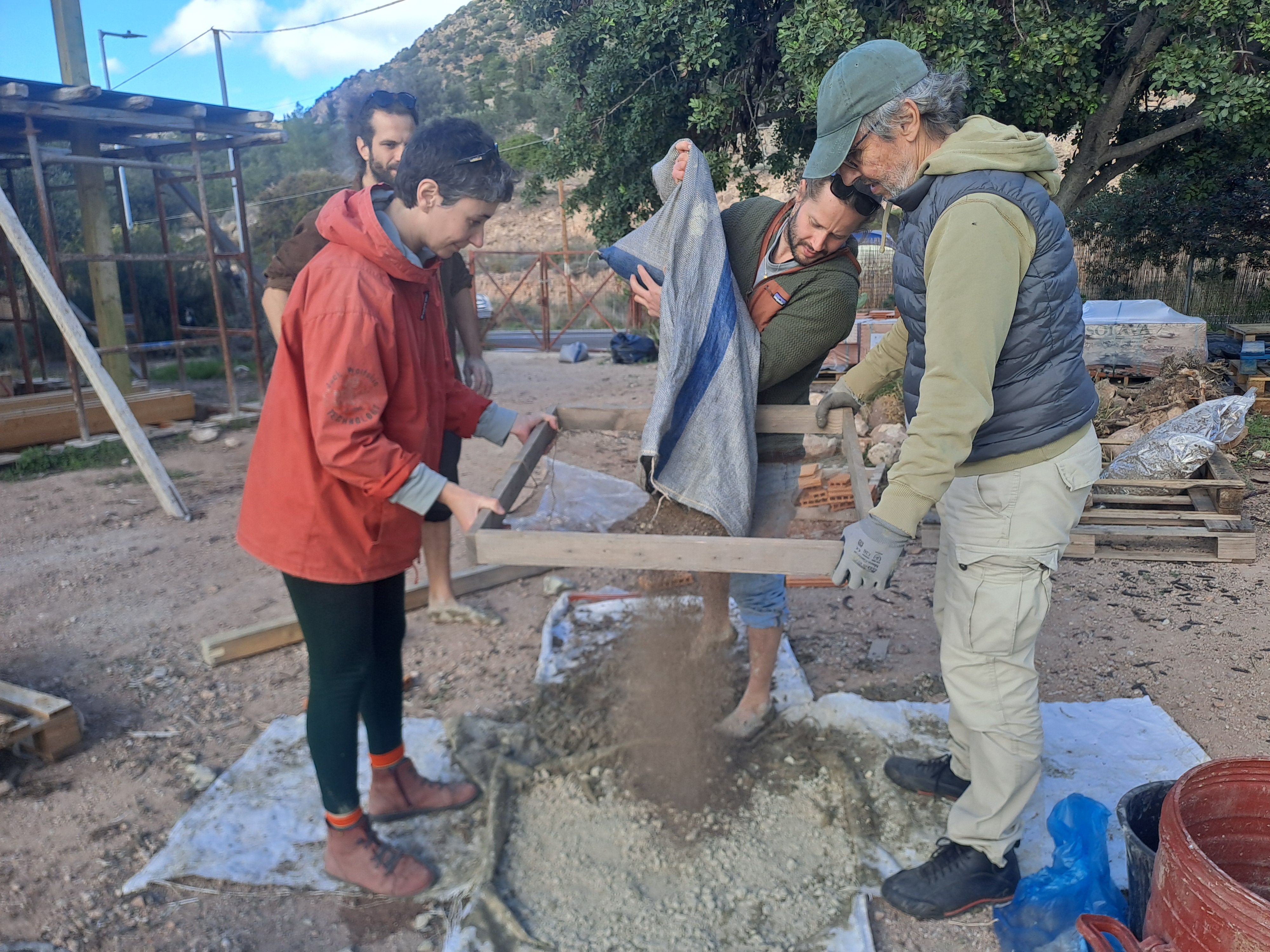
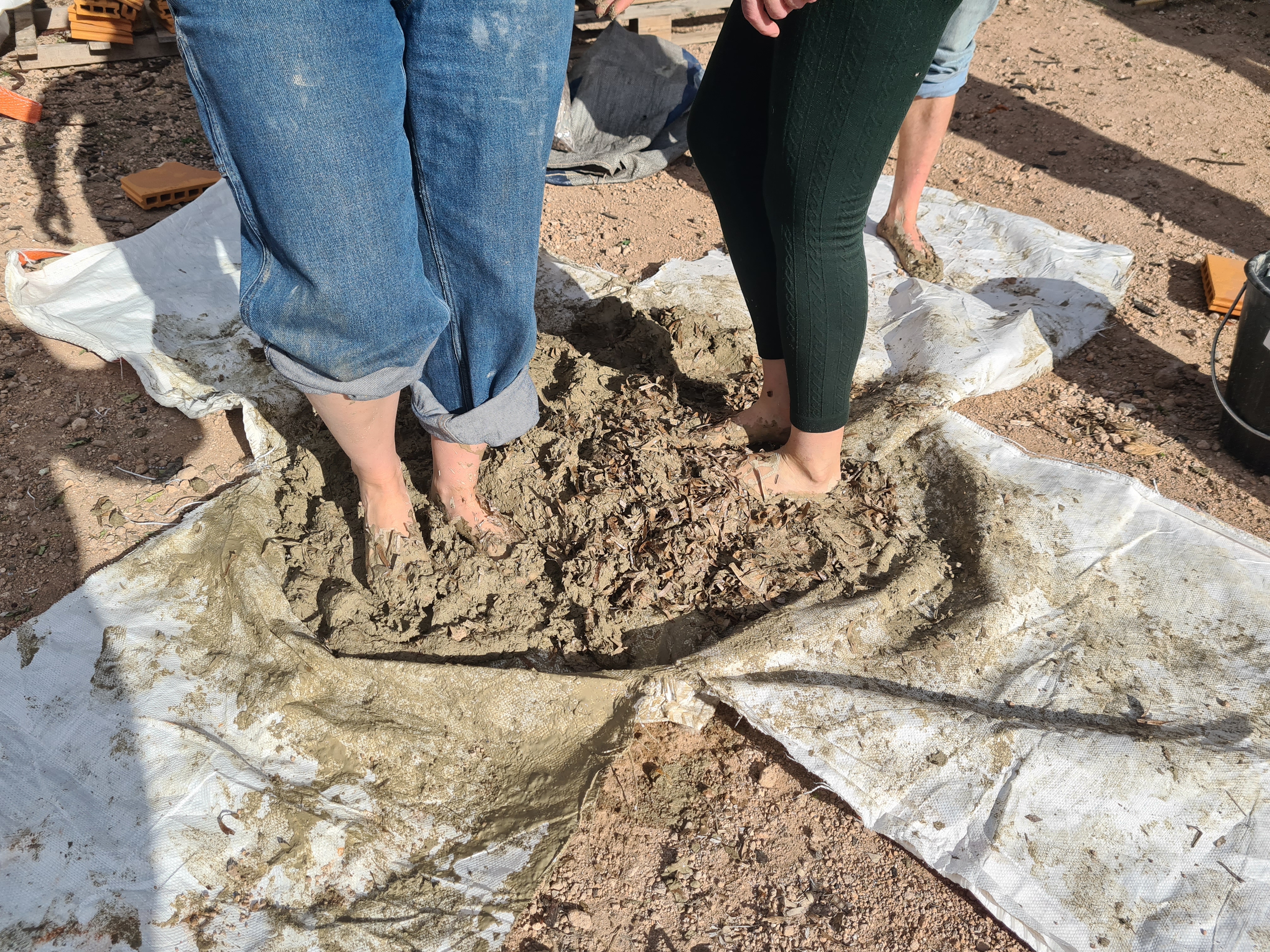
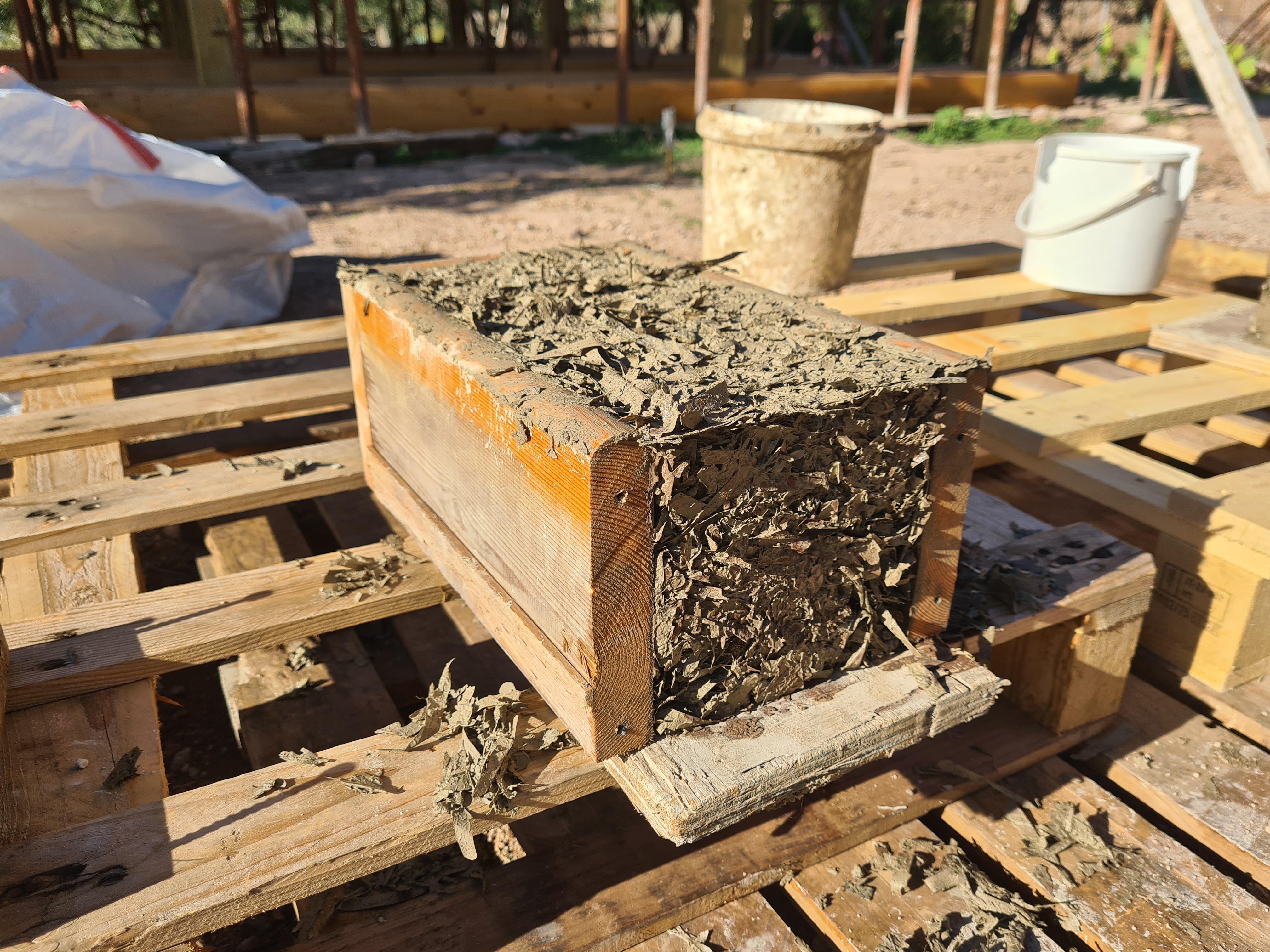
In November 2025, a chance encounter with Swiss clay constructor and artist Georg Faulhaber led to a workshop looking more closely at how local clays from various sites could be mixed with seagrass collected from the island's beaches to create adobe bricks as well as an insulation layer. We worked as a group to source the clay, process it and mix the clay, water and seagrass together to make a cohesive mass that could then be put into molds to create forms that air dry over several months.
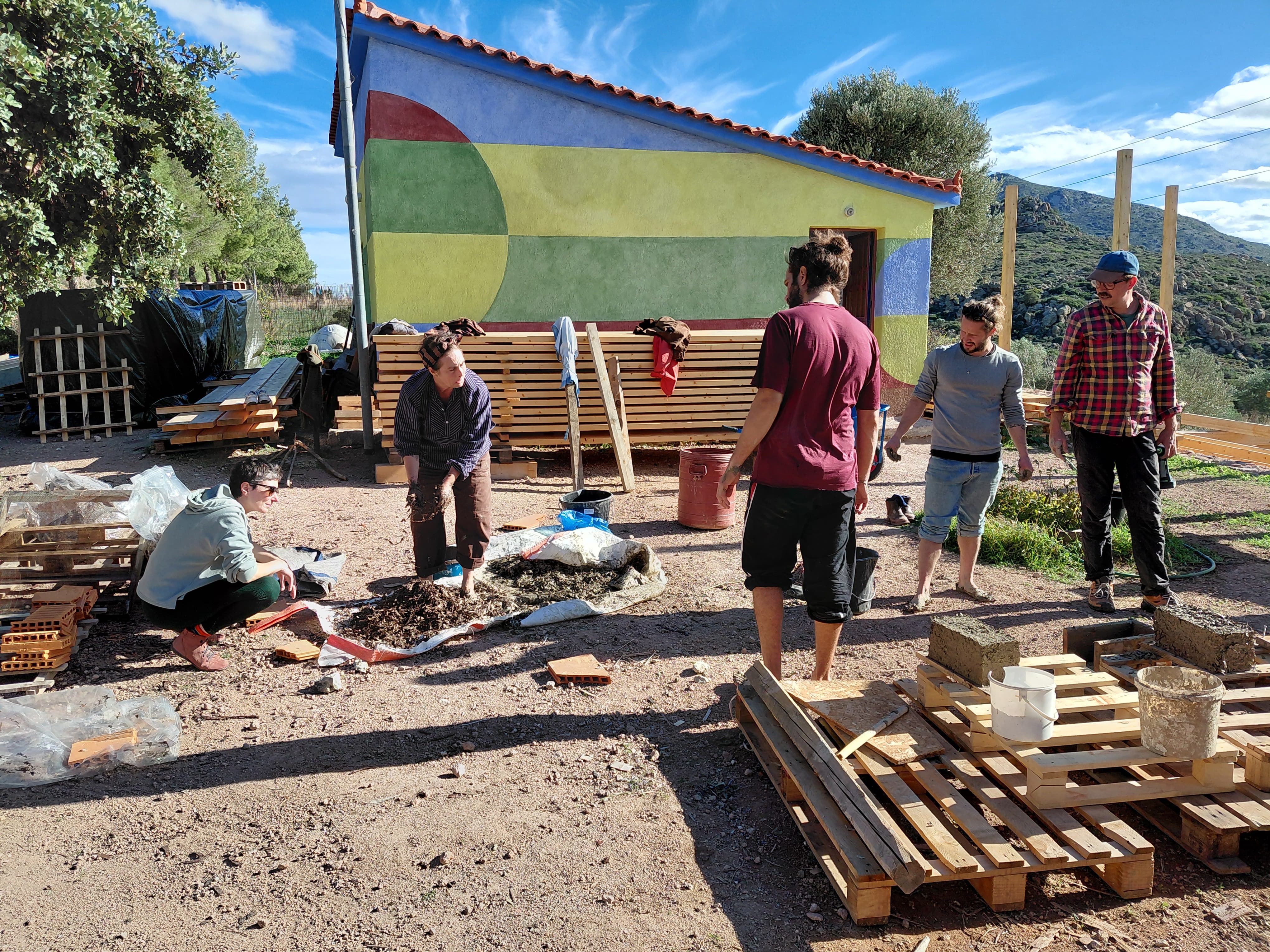
Georg helped us understand the artisanal scale, and how following 'the old ways' was often better than mechanising the processes for making bricks. We talked about scale, work flows and what it means to use matter from our local bio-region, but without scaling up to an extractive level. We hope that these early experiments will be the first in a more expanded research into using seagrass in local architecture as a viable way of using waste material in a constructive way.
Our ongoing seagrass programme is part of "Mapping Seagrass", supported by the 2025 TIDAL ArtS Lighthouse programme, a Horizon EU funded project.